In computing, the Halloween Problem refers to a phenomenon in databases in which an update operation causes a change in the physical location of a row, potentially allowing the row to be visited again later in the same update operation. This could even cause an infinite loop in some cases where updates continually place the updated record ahead of the scan performing the update operation. The potential for this database error was first discovered by Don Chamberlin, Pat Selinger, and Morton Astrahan in the mid-1970s, on Halloween day, while working on query optimization. They wrote a SQL query supposed to give a ten percent raise to every employee who earned less than $25,000. This query would run successfully, with no errors, but when finished all the employees in the database earned at least $25,000, because it kept giving them a raise until they reached that level. The expectation was that the query would iterate over each of the employee records with a salary less than $25,000 precisely once. In fact, because even updated records were visible to the query execution engine and so continued to match the query's criteria, salary records were matching multiple times and each time being given a 10% raise until they were all greater than $25,000. Contrary to what some believe, the name is not descriptive of the nature of the problem but rather was given due to the day it was discovered on. As recounted by Don Chamberlin: Pat and Morton discovered this problem on Halloween... I remember they came into my office and said, "Chamberlin, look at this. We have to make sure that when the optimizer is making a plan for processing an update, it doesn't use an index that is based on the field that is being updated. How are we going to do that?" It happened to be on a Friday, and we said, "Listen, we are not going to be able to solve this problem this afternoon. Let's just give it a name. We'll call it the Halloween Problem and we'll work on it next week." And it turns out it has been called that ever since.
Bayesian programming
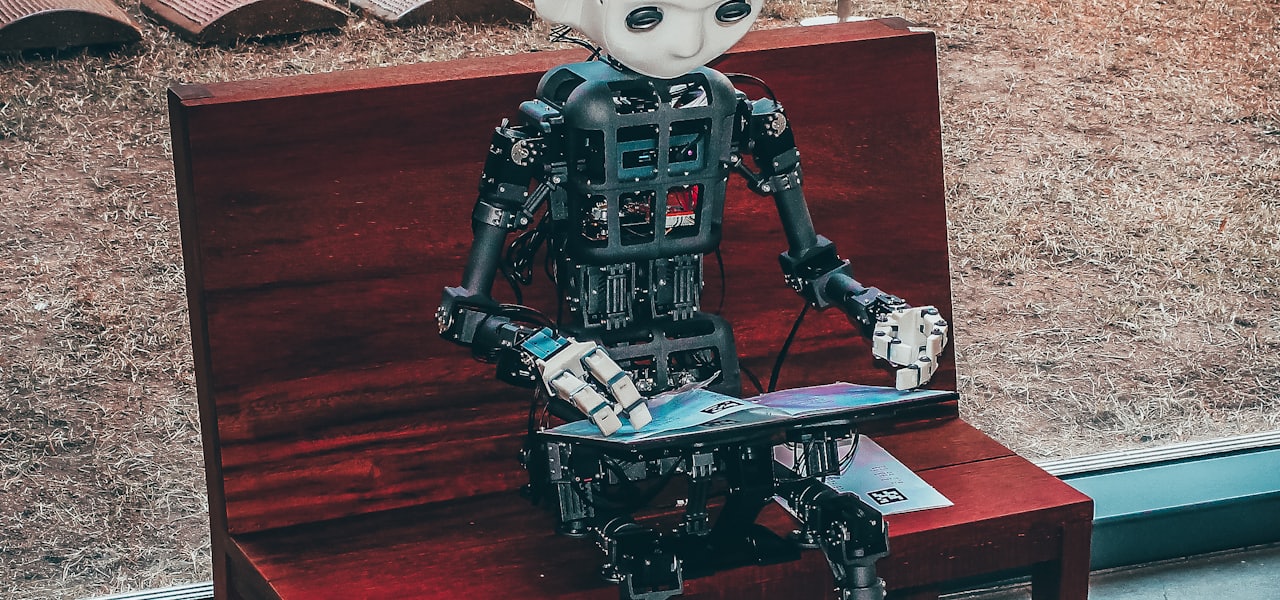
Bayesian programming is a formalism and a methodology for having a technique to specify probabilistic models and solve problems when less than the necessary information is available. Edwin T. Jaynes proposed that probability could be considered as an alternative and an extension of logic for rational reasoning with incomplete and uncertain information. In his founding book Probability Theory: The Logic of Science he developed this theory and proposed what he called "the robot," which was not a physical device, but an inference engine to automate probabilistic reasoning—a kind of Prolog for probability instead of logic. Bayesian programming is a formal and concrete implementation of this "robot". Bayesian programming may also be seen as an algebraic formalism to specify graphical models such as, for instance, Bayesian networks, dynamic Bayesian networks, Kalman filters or hidden Markov models. Indeed, Bayesian programming is more general than Bayesian networks and has a power of expression equivalent to probabilistic factor graphs. == Formalism == A Bayesian program is a means of specifying a family of probability distributions. The constituent elements of a Bayesian program are presented below: Program { Description { Specification ( π ) { Variables Decomposition Forms Identification (based on δ ) Question {\displaystyle {\text{Program}}{\begin{cases}{\text{Description}}{\begin{cases}{\text{Specification}}(\pi ){\begin{cases}{\text{Variables}}\\{\text{Decomposition}}\\{\text{Forms}}\\\end{cases}}\\{\text{Identification (based on }}\delta )\end{cases}}\\{\text{Question}}\end{cases}}} A program is constructed from a description and a question. A description is constructed using some specification ( π {\displaystyle \pi } ) as given by the programmer and an identification or learning process for the parameters not completely specified by the specification, using a data set ( δ {\displaystyle \delta } ). A specification is constructed from a set of pertinent variables, a decomposition and a set of forms. Forms are either parametric forms or questions to other Bayesian programs. A question specifies which probability distribution has to be computed. === Description === The purpose of a description is to specify an effective method of computing a joint probability distribution on a set of variables { X 1 , X 2 , ⋯ , X N } {\displaystyle \left\{X_{1},X_{2},\cdots ,X_{N}\right\}} given a set of experimental data δ {\displaystyle \delta } and some specification π {\displaystyle \pi } . This joint distribution is denoted as: P ( X 1 ∧ X 2 ∧ ⋯ ∧ X N ∣ δ ∧ π ) {\displaystyle P\left(X_{1}\wedge X_{2}\wedge \cdots \wedge X_{N}\mid \delta \wedge \pi \right)} . To specify preliminary knowledge π {\displaystyle \pi } , the programmer must undertake the following: Define the set of relevant variables { X 1 , X 2 , ⋯ , X N } {\displaystyle \left\{X_{1},X_{2},\cdots ,X_{N}\right\}} on which the joint distribution is defined. Decompose the joint distribution (break it into relevant independent or conditional probabilities). Define the forms of each of the distributions (e.g., for each variable, one of the list of probability distributions). ==== Decomposition ==== Given a partition of { X 1 , X 2 , … , X N } {\displaystyle \left\{X_{1},X_{2},\ldots ,X_{N}\right\}} containing K {\displaystyle K} subsets, K {\displaystyle K} variables are defined L 1 , ⋯ , L K {\displaystyle L_{1},\cdots ,L_{K}} , each corresponding to one of these subsets. Each variable L k {\displaystyle L_{k}} is obtained as the conjunction of the variables { X k 1 , X k 2 , ⋯ } {\displaystyle \left\{X_{k_{1}},X_{k_{2}},\cdots \right\}} belonging to the k t h {\displaystyle k^{th}} subset. Recursive application of Bayes' theorem leads to: P ( X 1 ∧ X 2 ∧ ⋯ ∧ X N ∣ δ ∧ π ) = P ( L 1 ∧ ⋯ ∧ L K ∣ δ ∧ π ) = P ( L 1 ∣ δ ∧ π ) × P ( L 2 ∣ L 1 ∧ δ ∧ π ) × ⋯ × P ( L K ∣ L K − 1 ∧ ⋯ ∧ L 1 ∧ δ ∧ π ) {\displaystyle {\begin{aligned}&P\left(X_{1}\wedge X_{2}\wedge \cdots \wedge X_{N}\mid \delta \wedge \pi \right)\\={}&P\left(L_{1}\wedge \cdots \wedge L_{K}\mid \delta \wedge \pi \right)\\={}&P\left(L_{1}\mid \delta \wedge \pi \right)\times P\left(L_{2}\mid L_{1}\wedge \delta \wedge \pi \right)\times \cdots \times P\left(L_{K}\mid L_{K-1}\wedge \cdots \wedge L_{1}\wedge \delta \wedge \pi \right)\end{aligned}}} Conditional independence hypotheses then allow further simplifications. A conditional independence hypothesis for variable L k {\displaystyle L_{k}} is defined by choosing some variable X n {\displaystyle X_{n}} among the variables appearing in the conjunction L k − 1 ∧ ⋯ ∧ L 2 ∧ L 1 {\displaystyle L_{k-1}\wedge \cdots \wedge L_{2}\wedge L_{1}} , labelling R k {\displaystyle R_{k}} as the conjunction of these chosen variables and setting: P ( L k ∣ L k − 1 ∧ ⋯ ∧ L 1 ∧ δ ∧ π ) = P ( L k ∣ R k ∧ δ ∧ π ) {\displaystyle P\left(L_{k}\mid L_{k-1}\wedge \cdots \wedge L_{1}\wedge \delta \wedge \pi \right)=P\left(L_{k}\mid R_{k}\wedge \delta \wedge \pi \right)} We then obtain: P ( X 1 ∧ X 2 ∧ ⋯ ∧ X N ∣ δ ∧ π ) = P ( L 1 ∣ δ ∧ π ) × P ( L 2 ∣ R 2 ∧ δ ∧ π ) × ⋯ × P ( L K ∣ R K ∧ δ ∧ π ) {\displaystyle {\begin{aligned}&P\left(X_{1}\wedge X_{2}\wedge \cdots \wedge X_{N}\mid \delta \wedge \pi \right)\\={}&P\left(L_{1}\mid \delta \wedge \pi \right)\times P\left(L_{2}\mid R_{2}\wedge \delta \wedge \pi \right)\times \cdots \times P\left(L_{K}\mid R_{K}\wedge \delta \wedge \pi \right)\end{aligned}}} Such a simplification of the joint distribution as a product of simpler distributions is called a decomposition, derived using the chain rule. This ensures that each variable appears at the most once on the left of a conditioning bar, which is the necessary and sufficient condition to write mathematically valid decompositions. ==== Forms ==== Each distribution P ( L k ∣ R k ∧ δ ∧ π ) {\displaystyle P\left(L_{k}\mid R_{k}\wedge \delta \wedge \pi \right)} appearing in the product is then associated with either a parametric form (i.e., a function f μ ( L k ) {\displaystyle f_{\mu }\left(L_{k}\right)} ) or a question to another Bayesian program P ( L k ∣ R k ∧ δ ∧ π ) = P ( L ∣ R ∧ δ ^ ∧ π ^ ) {\displaystyle P\left(L_{k}\mid R_{k}\wedge \delta \wedge \pi \right)=P\left(L\mid R\wedge {\widehat {\delta }}\wedge {\widehat {\pi }}\right)} . When it is a form f μ ( L k ) {\displaystyle f_{\mu }\left(L_{k}\right)} , in general, μ {\displaystyle \mu } is a vector of parameters that may depend on R k {\displaystyle R_{k}} or δ {\displaystyle \delta } or both. Learning takes place when some of these parameters are computed using the data set δ {\displaystyle \delta } . An important feature of Bayesian programming is this capacity to use questions to other Bayesian programs as components of the definition of a new Bayesian program. P ( L k ∣ R k ∧ δ ∧ π ) {\displaystyle P\left(L_{k}\mid R_{k}\wedge \delta \wedge \pi \right)} is obtained by some inferences done by another Bayesian program defined by the specifications π ^ {\displaystyle {\widehat {\pi }}} and the data δ ^ {\displaystyle {\widehat {\delta }}} . This is similar to calling a subroutine in classical programming and provides an easy way to build hierarchical models. === Question === Given a description (i.e., P ( X 1 ∧ X 2 ∧ ⋯ ∧ X N ∣ δ ∧ π ) {\displaystyle P\left(X_{1}\wedge X_{2}\wedge \cdots \wedge X_{N}\mid \delta \wedge \pi \right)} ), a question is obtained by partitioning { X 1 , X 2 , ⋯ , X N } {\displaystyle \left\{X_{1},X_{2},\cdots ,X_{N}\right\}} into three sets: the searched variables, the known variables and the free variables. The 3 variables S e a r c h e d {\displaystyle Searched} , K n o w n {\displaystyle Known} and F r e e {\displaystyle Free} are defined as the conjunction of the variables belonging to these sets. A question is defined as the set of distributions: P ( S e a r c h e d ∣ Known ∧ δ ∧ π ) {\displaystyle P\left(Searched\mid {\text{Known}}\wedge \delta \wedge \pi \right)} made of many "instantiated questions" as the cardinal of K n o w n {\displaystyle Known} , each instantiated question being the distribution: P ( Searched ∣ Known ∧ δ ∧ π ) {\displaystyle P\left({\text{Searched}}\mid {\text{Known}}\wedge \delta \wedge \pi \right)} === Inference === Given the joint distribution P ( X 1 ∧ X 2 ∧ ⋯ ∧ X N ∣ δ ∧ π ) {\displaystyle P\left(X_{1}\wedge X_{2}\wedge \cdots \wedge X_{N}\mid \delta \wedge \pi \right)} , it is always possible to compute any possible question using the following general inference: P ( Searched ∣ Known ∧ δ ∧ π ) = ∑ Free [ P ( Searched ∧ Free ∣ Known ∧ δ ∧ π ) ] = ∑ Free [ P ( Searched ∧ Free ∧ Known ∣ δ ∧ π ) ] P ( Known ∣ δ ∧ π ) = ∑ Free [ P ( Searched ∧ Free ∧ Known ∣ δ ∧ π ) ] ∑ Free ∧ Searched [ P ( Searched ∧ Free ∧ Known ∣ δ ∧ π ) ] = 1 Z × ∑ Free [ P ( Searched ∧ Free ∧ Known ∣ δ ∧ π ) ] {\displaystyle {\begin{aligned}&P\left({\text{Searched}}\mid {\text{Known}}\wedge \delta \wedge \pi \right)\\={}&\sum _{\text{Free}}\left[P\left({\text{Searched}}\wedge {\text{Free}}\mid {\text{Known}}\wedge \delta \wedge \
Simply Local
Simply Local is a decentralized community social networking and neighborhood broadcasting service developed by Simply Local, based in New Delhi. The app is used as a tool by residents to bridge the information gap and know what is happening in the locality. Simply Local creates private geo-fenced networks for people living in an area and provides social and community related services within that network. The user doesn’t post to a single person but broadcasts to a chosen community. One of its primary purposes is also to connect citizens to their elected representatives. Each community is independent of the other and information shared remains telescoped to that particular community. The app has been designed to maintain privacy and security of users and provides decentralized social networking in the sense that it forms an owner-independent, micro community, which is not connected with the world outside. Simply Local is available on Android Play and iOS App Store. It is available in two languages - English and Hindi. Simply Local’s founder and CEO is Nikhil Bapna. == History == 2020 May: Included as a Top 5 Useful App by Zee News. 2020: Used to connect candidates with local residents during the Delhi assembly elections. 2019: Renamed from Gadfly to its current name. 2018: Used for Karnataka State Elections to get detailed information on candidates. 2017: Launched under the name Gadfly as a tool to connect citizens with their elected representatives.
Data steward
A data steward is an oversight or data governance role within an organization, and is responsible for ensuring the quality and fitness for purpose of the organization's data assets, including the metadata for those data assets. A data steward may share some responsibilities with a data custodian, such as the awareness, accessibility, release, appropriate use, security and management of data. A data steward would also participate in the development and implementation of data assets. A data steward may seek to improve the quality and fitness for purpose of other data assets their organization depends upon but is not responsible for. Data stewards have a specialist role that utilizes an organization's data governance processes, policies, guidelines and responsibilities for administering an organizations' entire data in compliance with policy and/or regulatory obligations (e.g., GDPR, HIPAA). The overall objective of a data steward is the data quality of the data assets, datasets, data records and data elements. This includes documenting metainformation for the data, such as definitions, related rules/governance, physical manifestation, and related data models (most of these properties being specific to an attribute/concept relationship), identifying owners/custodian's various responsibilities, relations insight pertaining to attribute quality, aiding with project requirement data facilitation and documentation of capture rules. Data stewards begin the stewarding process with the identification of the data assets and elements which they will steward, with the ultimate result being standards, controls and data entry. The steward works closely with business glossary standards analysts (for standards), with data architect/modelers (for standards), with DQ analysts (for controls) and with operations team members (good-quality data going in per business rules) while entering data. Data stewardship roles are common when organizations attempt to exchange data precisely and consistently between computer systems and to reuse data-related resources. Master data management often makes references to the need for data stewardship for its implementation to succeed. Data stewardship must have precise purpose, fit for purpose or fitness. == Data steward responsibilities == A data steward ensures that each assigned data element: Has clear and unambiguous data element definition Does not conflict with other data elements in the metadata registry (removes duplicates, overlap etc.) Has clear enumerated value definitions if it is of type Code Is still being used (remove unused data elements) Is being used consistently in various computer systems Is being used, fit for purpose = Data Fitness Has adequate documentation on appropriate usage and notes Documents the origin and sources of authority on each metadata element Is protected against unauthorised access or change Responsibilities of data stewards vary between different organisations and institutions. For example, at Delft University of Technology, data stewards are perceived as the first contact point for any questions related to research data. They also have subject-specific background allowing them to easily connect with researchers and to contextualise data management problems to take into account disciplinary practices. == Types of data stewards == Depending on the set of data stewardship responsibilities assigned to an individual, there are 4 types (or dimensions of responsibility) of data stewards typically found within an organization: Data object data steward - responsible for managing reference data and attributes of one business data entity Business data steward - responsible for managing critical data, both reference and transactional, created or used by one business function. The data steward may also serve as a liaison between the organization's data users and technical teams, helping to bridge the gap between business needs and technical requirements. They may also play a role in educating others within the organization about best practices for data management, and advocating for data-driven decision-making. Process data steward - responsible for managing data across one business process System data steward - responsible for managing data for at least one IT system == Benefits of data stewardship == Systematic data stewardship can foster: Faster analysis Consistent use of data management resources Easy mapping of data between computer systems and exchange documents Lower costs associated with migration to (for example) service-oriented architecture (SOA) Mitigation of data risk Better control of dangers associated with privacy, legal, errors, etc. Assignment of each data element to a person sometimes seems like an unimportant process. But multiple groups have found that users have greater trust and usage rates in systems where they can contact a person with questions on each data element. == Examples == Delft University of Technology (TU Delft) offers an example of data stewardship implementation at a research institution. In 2017 the Data Stewardship Project was initiated at TU Delft to address research data management needs in a disciplinary manner across the whole campus. Dedicated data stewards with subject-specific background were appointed at every TU Delft faculty to support researchers with data management questions and to act as a linking point with the other institutional support services. The project is coordinated centrally by TU Delft Library, and it has its own website, blog and a YouTube channel. The [1]EPA metadata registry furnishes an example of data stewardship. Note that each data element therein has a "POC" (point of contact). In 2023, ETH Zurich launched the Data Stewardship Network (DSN) to facilitate collaboration among employees engaged in data management, analysis, and code development across research groups. The DSN serves as a platform for networking and knowledge exchange, aiming to professionalize the role of data stewards who support research data management and reproducible workflows. Established by the team for Research Data Management and Digital Curation at the ETH Library, the DSN collaborates with Scientific IT Services to provide expertise in areas such as storage infrastructure and reproducible workflows. == Data stewardship applications == Information stewardship applications are business solutions used by business users acting in the role of information steward (interpreting and enforcing information governance policy, for example). These developing solutions represent, for the most part, an amalgam of a number of disparate, previously IT-centric tools already on the market, but are organized and presented in such a way that information stewards (a business role) can support the work of information policy enforcement as part of their normal, business-centric, day-to-day work in a range of use cases. The initial push for the formation of this new category of packaged software came from operational use cases — that is, use of business data in and between transactional and operational business applications. This is where most of the master data management efforts are undertaken in organizations. However, there is also now a faster-growing interest in the new data lake arena for more analytical use cases.
Instagram face
Instagram face is a beauty standard based on the filters and influencers popular on Instagram. == Overview == An "Instagram face" has catlike eyes, long lashes, a small nose, high cheekbones, full lips, and a blank expression. Digital filters manipulate photographs and video to create an idealized image that, according to critics, has resulted in an unrealistic and homogeneous beauty standard. According to Jia Tolentino, the face is "distinctly white but ambiguously ethnic". The face has been described as a racial composite of different peoples. In 2024, cosmetic surgeon Paul Banwell said, "People used to come to see me asking to look like a particular celebrity, but many patients come to me now wanting to look like the filtered version of themselves." While based on digital filters, the look is achieved in person using heavy applications of makeup or cosmetic surgery. Plastic surgery, Botox injections, and injectable filler have significantly increased in popularity since the rise of digital filters. Influencers market makeup products designed to recreate the look. == History == The growth of reality television series and social media throughout the 2010s has influenced the popularity of Instagram face. In 2019, The New Yorker referred to this phenomenon as "Instagram Face," identifying Kim Kardashian as its "patient zero." Similarly, her younger sister Kylie Jenner significantly impacted the trend with her 2015 lip filler confession, which acted as a catalyst, introducing Juvéderm to a new generation. Sirin Kale of Vice News has described Jenner as "at the vanguard of an aesthetic that’s swept through British towns and cities," while also pointing towards other celebrities such as Iggy Azalea and Farrah Abraham. In 2018, Americans underwent 7 million neurotoxin injections and 2.5 million filler injections and spent $16.5 billion on cosmetic surgery. 92% of the latter was performed on women. Botox usage has also been on the rise. == Criticism == In her 2021 book The Selfie, Temporality, and Contemporary Photography, Claire Raymond of Princeton University criticised "Instagram faces" for erasing "heritable quirks and lived history; it erases what makes the human face so compelling, whether conventionally beautiful or not," while also arguing that the procedures used to create Instagram faces "numb and freeze the face and skin, rendering less mobile the lips, the eyes, and the neck. Numbness is the central feature of the experience for the woman who gets Instagram face through cosmetic procedures. Others may see her more, but she feels less and less." == Influence on popular culture == The increasing popularity of cosmetic surgeries towards a homogeneous ideal has resulted in the emergence of the "goopcore" sub-genre of body horror. The sub-genre combines graphic violence with body modifications from the beauty industry. Allie Rowbottom's goopcore novel Aesthetica centers around an influencer attempting to undo years of plastic surgery with a new experimental procedure.
AI content watermarking
AI content watermarking is the process of embedding imperceptible yet detectable signals into content generated by artificial intelligence systems, such as text, images, audio, or video. The technique allows the content to be traced and identified as machine-generated without compromising its quality for the end user. AI watermarking has emerged as a key approach to address growing concerns about misinformation, deepfakes, copyright infringement, and the traceability of synthetic content in the context of the rapid development of generative artificial intelligence. Unlike traditional visible watermarks used in photography, AI content watermarks are typically invisible to humans and can only be detected and deciphered algorithmically. The concept is distinct from the watermarking of AI models themselves (to prevent model theft) and from the watermarking of training data (to combat unauthorized data use). Modern AI watermarking schemes are typically formalized as a pair of algorithms, an embedding (or generation) algorithm and a detection algorithm, sharing a secret key, whose performance is evaluated along three competing axes: quality (the watermark must not noticeably degrade outputs), detectability (the watermark must be statistically distinguishable from unwatermarked content), and robustness (the watermark must persist under adversarial or incidental modifications). == Background == Digital watermarking has been used for decades to protect physical and digital media, from paper currency to photographs. Classical schemes typically embedded a fixed bit-string into a fixed cover signal, with robustness criteria defined against a small fixed set of distortions such as JPEG compression or additive Gaussian noise. The rapid advancement of generative AI in the early 2020s, however, created a new and qualitatively different demand: rather than protecting a single artifact, watermarks for AI content must be embedded automatically across an open-ended distribution of generated outputs while remaining robust to a much wider class of adversarial transformations, including paraphrasing, image regeneration via diffusion models, and re-recording. Large image generation models such as DALL-E, Stable Diffusion, and Midjourney, along with large language models like ChatGPT, made it possible to produce highly realistic synthetic text, images, audio, and video at scale, raising significant ethical and security concerns. In July 2023, the Biden administration secured voluntary commitments from leading AI companies, including OpenAI, Alphabet, Meta, and Amazon, to develop watermarking and other provenance technologies to help users identify AI-generated content. == Formal definitions and design goals == Most modern AI watermarking schemes can be formalized as a pair of algorithms ( W m , D e t e c t ) {\displaystyle ({\mathsf {Wm}},{\mathsf {Detect}})} parameterized by a secret key k {\displaystyle k} . The embedding algorithm W m {\displaystyle {\mathsf {Wm}}} takes a generative model M {\displaystyle M} (and optionally a prompt) and returns a watermarked output x {\displaystyle x} ; the detection algorithm D e t e c t ( x , k ) {\displaystyle {\mathsf {Detect}}(x,k)} outputs a real-valued score (typically a p-value or log-likelihood ratio) used to decide whether x {\displaystyle x} was produced by the watermarked generator. The literature evaluates such schemes along several largely conflicting criteria: Criteria for evaluation include imperceptibility or quality preservation, measured for text via perplexity and human preference judgments, and for images and audio via metrics such as PSNR, SSIM, LPIPS, or PESQ. Detectability is typically expressed as the true positive rate at a fixed false positive rate (e.g. 1% or 10^-6), or as the number of tokens or pixels needed to reach a given confidence level. Robustness refers to the requirement that the watermark should survive expected modifications like JPEG or MP3 compression, cropping, noise, paraphrasing, or machine translation. Distortion-freeness is a stronger property requiring that the marginal distribution of any single watermarked output be statistically identical to the unwatermarked model's distribution. Schemes due to Aaronson, Christ et al., and Kuditipudi et al. are distortion-free in this sense, while the original Kirchenbauer et al. scheme is not. Forgery resistance or unforgeability means an adversary without the secret key should be unable to produce content that passes detection. == Techniques == AI watermarking techniques vary significantly depending on the type of content being watermarked. At its core, the process involves two main stages: embedding (or encoding) the watermark, and detection. There are two primary methods for embedding: watermarking during content generation, which requires access to the AI model itself but is generally more robust, and post-generation watermarking, which can be applied to content from any source, including closed-source models. Watermarks can be broadly classified as visible, including overt marks such as logos or text overlays, or imperceptible, which are detectable only by algorithms. They can also be classified by durability: robust watermarks are designed to withstand common transformations such as compression, cropping, and re-encoding, while fragile watermarks are easily destroyed by any alteration, making them useful for tamper detection. A further axis distinguishes zero-bit watermarks, which only signal "this content was generated by model M," from multi-bit watermarks, which embed an arbitrary payload (such as a user identifier) that can be recovered at detection time. === Text === Text watermarking is considered one of the most challenging modalities because natural language offers relatively limited redundancy compared to images or audio. Modern approaches for large language models alter the autoregressive sampling process so that some statistical signature is left in the choice of tokens, while leaving the surface form of the text unchanged. The literature distinguishes three main families of generation-time text watermarks. Logit-biasing schemes (e.g. KGW) add a fixed bias δ {\displaystyle \delta } to a pseudorandomly selected subset of vocabulary logits before softmax sampling. Reweighting or sampling-based schemes (e.g. SynthID-Text) compose multiple pseudorandom tournaments over the model's full distribution. Distortion-free schemes based on the Gumbel-max trick or inverse transform sampling (Aaronson 2022; Kuditipudi et al. 2023; Christ et al. 2024) preserve the marginal output distribution of the model. ==== KGW: token-probability shifting ==== The pioneering "green list / red list" scheme of Kirchenbauer et al. (KGW), introduced at ICML 2023, is the foundation for most subsequent text watermarks. At each decoding step t {\displaystyle t} , a pseudorandom function (PRF) keyed by a secret k {\displaystyle k} is applied to a context window of h {\displaystyle h} previous tokens to deterministically partition the vocabulary V {\displaystyle V} of size N {\displaystyle N} into a "green list" G ⊂ V {\displaystyle G\subset V} of size γ N {\displaystyle \gamma N} and its complement, the "red list" R = V ∖ G {\displaystyle R=V\setminus G} , where γ ∈ ( 0 , 1 ) {\displaystyle \gamma \in (0,1)} (typically γ = 1 / 2 {\displaystyle \gamma =1/2} ) is the green fraction. A logits processor then increments every green-list logit by a fixed bias δ > 0 {\displaystyle \delta >0} before softmax: ℓ v ′ = ℓ v + δ ⋅ 1 [ v ∈ G ] {\displaystyle \ell '_{v}=\ell _{v}+\delta \cdot \mathbf {1} [v\in G]} so that, after sampling, green tokens are over-represented but generation is not constrained to green tokens alone; high-entropy positions tolerate the bias gracefully, while low-entropy positions (where one token dominates the logits) override the watermark and preserve correctness on factual content. Detection requires only the secret key and the candidate text, not the language model itself. The detector recomputes the partition g ( ⋅ ) {\displaystyle g(\cdot )} for each token, counts the number of green hits | G | hits {\displaystyle |G|_{\text{hits}}} in a sequence of length T {\displaystyle T} , and computes a one-proportion z-test statistic: z = | G | hits − γ T T γ ( 1 − γ ) {\displaystyle z={\frac {|G|_{\text{hits}}-\gamma T}{\sqrt {T\gamma (1-\gamma )}}}} Under the null hypothesis that the text was written by an unwatermarked source (human or another model), the green-hit count is approximately binomially distributed with mean γ T {\displaystyle \gamma T} ; a large positive z {\displaystyle z} rejects the null hypothesis. The original paper reports that fewer than 25 watermarked tokens are sufficient to detect a watermark with a false positive rate below 10^-5 on the OPT-1.3B model. A follow-up study by the same group documented robustness under temperature sampling, top-p (nucleus) sampling, and human paraphrasing, and proposed sliding-window
Content repository
A content repository or content store is a database of digital content with an associated set of data management, search and access methods allowing application-independent access to the content, rather like a digital library, but with the ability to store and modify content in addition to searching and retrieving. The content repository acts as the storage engine for a larger application such as a content management system or a document management system, which adds a user interface on top of the repository's application programming interface. == Advantages provided by repositories == Common rules for data access allow many applications to work with the same content without interrupting the data. They give out signals when changes happen, letting other applications using the repository know that something has been modified, which enables collaborative data management. Developers can deal with data using programs that are more compatible with the desktop programming environment. The data model is scriptable when users use a content repository. == Content repository features == A content repository may provide functionality such as: Add/edit/delete content Hierarchy and sort order management Query / search Versioning Access control Import / export Locking Life-cycle management Retention and holding / records management == Examples == Apache Jackrabbit ModeShape == Applications == Content management Document management Digital asset management Records management Revision control Social collaboration Web content management == Standards and specification == Content repository API for Java WebDAV Content Management Interoperability Services